SlideLizard 1.5 Update

12.06.18  •  #NewRelease

Contents


Admit it: You always wanted to know who's in your audience. Every single person. At best with E-Mail address.

We have always wanted that too. Therefore we just integrated it into SlideLizard:

Read on to find out more!


Participant E-Mails & Export

See in detail who participated in your presentation and notify all participants by E-Mail or export a list as an Excel document.


Collect E-Mail addresses

Require a participant's E-Mail address to download your slides or open shared documents.


Prevent early viewing

Restrict the download of your presentation slides or shared documents (e.g. a handout) until the end of your presentation.


Share local documents
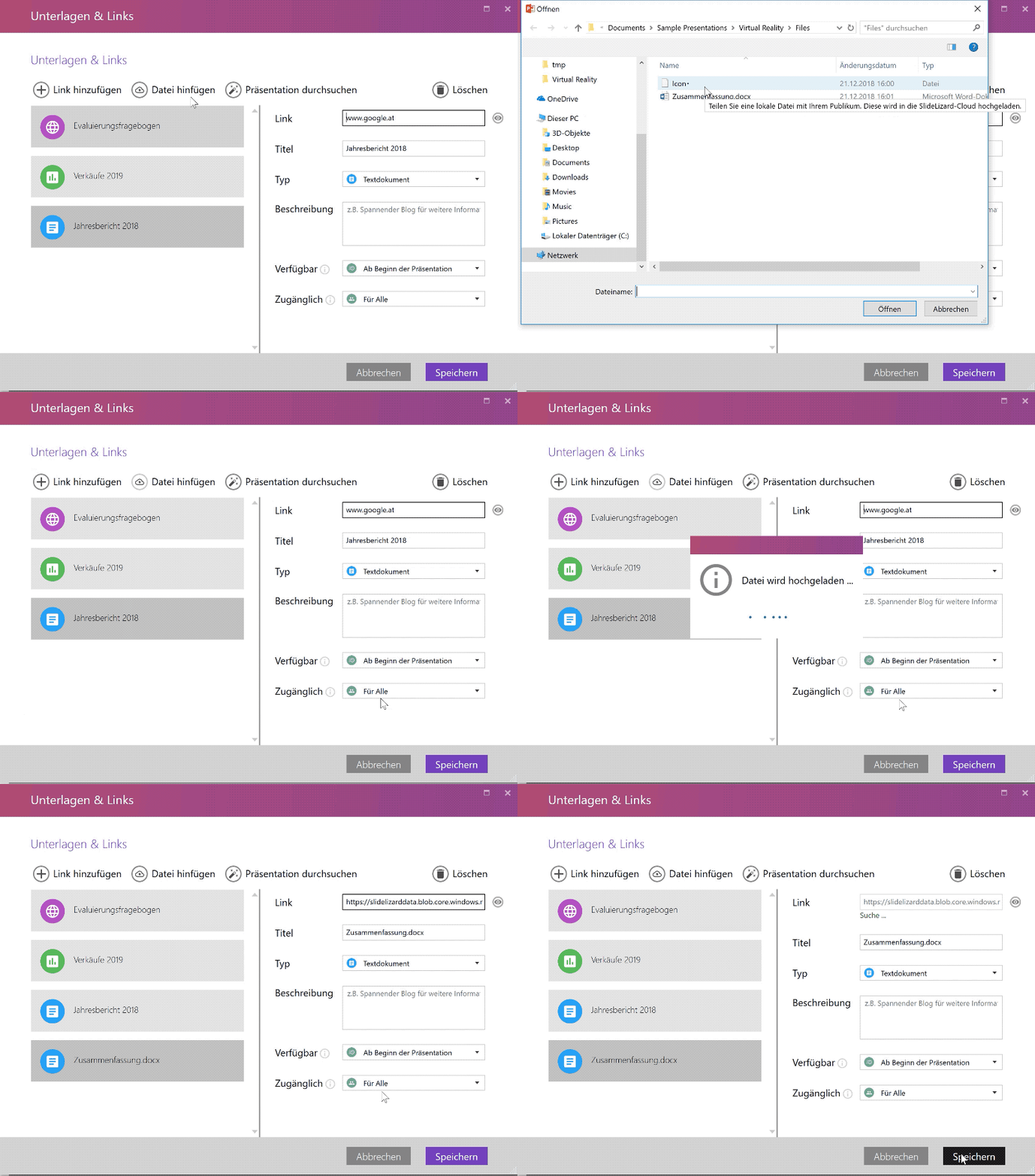
From now on, you can also upload and share local documents with your attendees.


Enjoy!


To update the SlideLizard PowerPoint Add-In, just open PowerPoint and you'll get a update dialog.
Don't have it installed yet? Download it here.


About the author

Daniel Amerbauer

Daniel is the Co-founder and CEO of SlideLizard. Perfectionist by nature, but also a passionate designer and developer.


Top blog articles
More posts

Large Presentation Model vs. Large Language Model: What's the Difference?

Top 10 Tools for increasing Audience Engagement

LIZ AI Produktbild
LIZ AI - Autopilot for PowerPoint

Your existing systems. Automatically orchestrated and centrally connected.

LIZ AI connects directly with your enterprise systems and automatically turns data into presentations. Content is intelligently generated, updated, and visualized directly in PowerPoint. Presentations are created in the background, stay up to date at all times, and automatically match your corporate design - without manual effort.

Learn more about LIZ AI

The Glossary for Presentations & AI

Nonverbal Communication

Nonverbal communication encompasses all forms of information conveyed without words — including body language, facial expressions, gestures, eye contact, posture, and tone of voice. Research suggests that a significant portion of interpersonal communication is nonverbal. In presentations, nonverbal cues strongly influence how a message is received: open posture conveys confidence, eye contact builds trust, and a steady voice signals authority. Presenters who align their nonverbal signals with their verbal content are generally perceived as more credible and engaging.

Learn more

Closed Questions

Closed questions are questions that can be answered with a limited set of responses — most commonly a simple 'yes' or 'no', or a selection from predefined options. They are used to gather specific, factual information quickly and efficiently. In presentations and training settings, closed questions are useful for gauging audience understanding, confirming agreement, or running quick polls. While efficient, they offer little depth and should be balanced with open-ended questions when richer feedback or discussion is needed.

Learn more

.potx file extension

A .potx file is a file which contains, styles, texts, layouts and formatting of a PowerPoint (.ppt) file. It's like a template and useful if you want to have more than one presentation with the same formatting.

Learn more

Recall Questions

Recall questions ask participants to retrieve and state information they have previously learned or been told. They test memory and knowledge retention rather than understanding or analysis. In training sessions and educational presentations, recall questions at the end of a segment can reinforce key points and check how much the audience has absorbed. While they don't assess deeper comprehension, they are an efficient tool for checking baseline knowledge and reinforcing core facts.

Learn more