SlideLizard 1.4 Update

22.08.18  •  #NewRelease

Contents

We got big news!


We have been hard at work shipping those features you have been asking for. With so much going on, we wanted to do a quick round up of all the new features we have released for you in the last 2 months:

Read on to learn more!


Live Slides

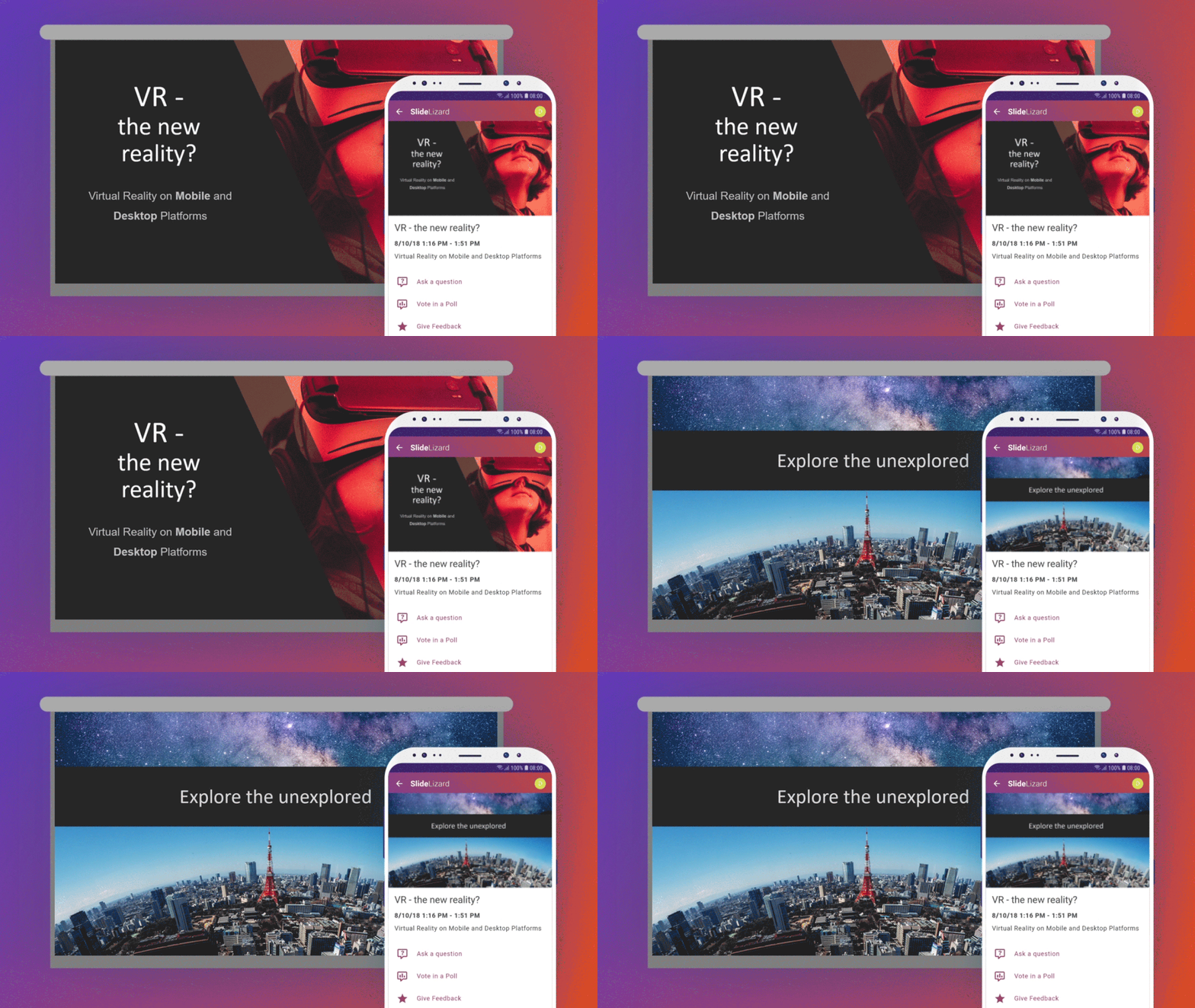
Following the presentation has never been easier! If the speaker switches to the next slide, all attendees are now automatically up to date.


Live Polls
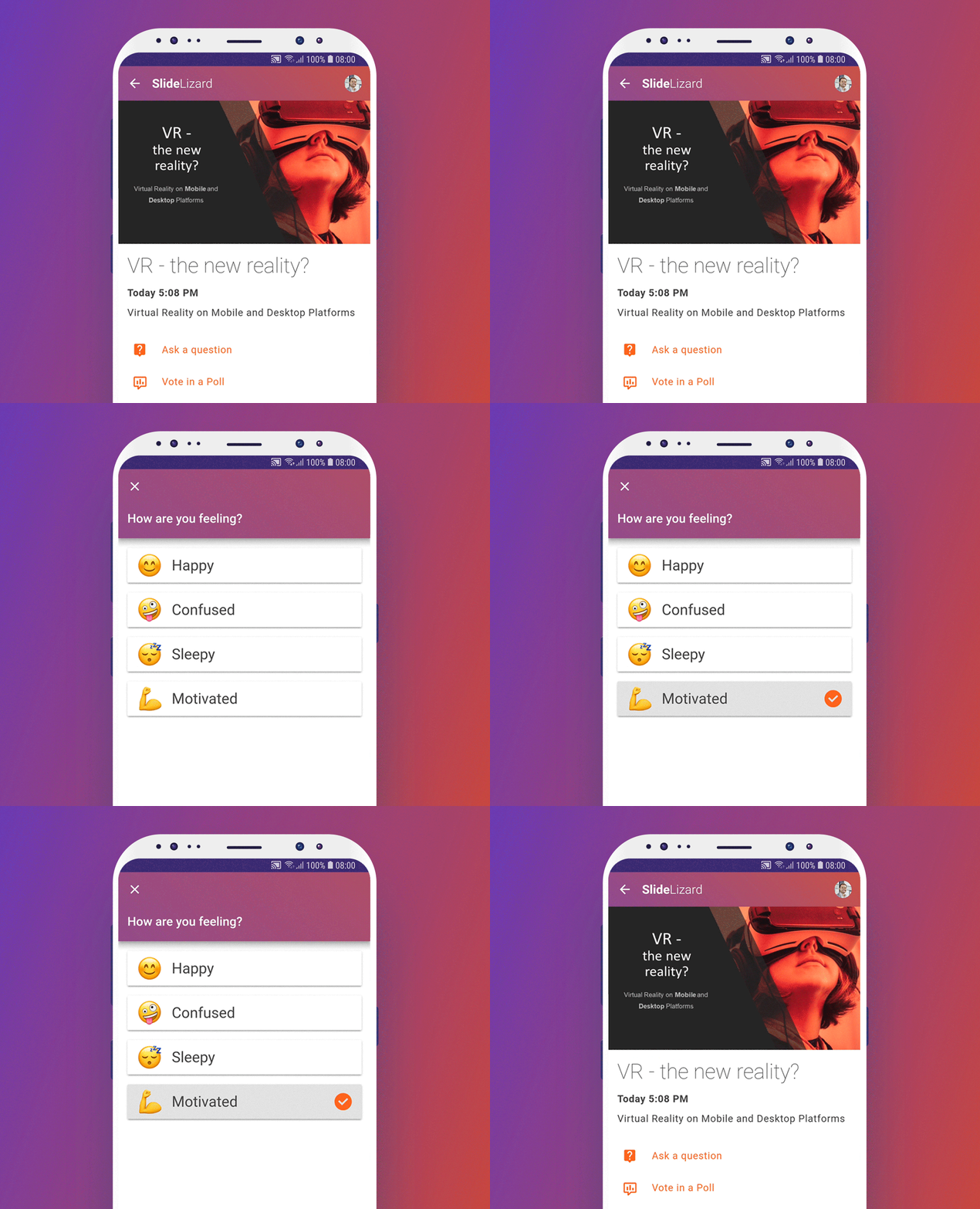
Want to know what your audience is thinking? Just ask them using our new Poll-Feature!


Ask your audience customized questions or use one of our predefined polls. Choose emojis or your own pictures to represent the answers and get a handy graph of your attendee's opinion!


Export Poll Results and Questions
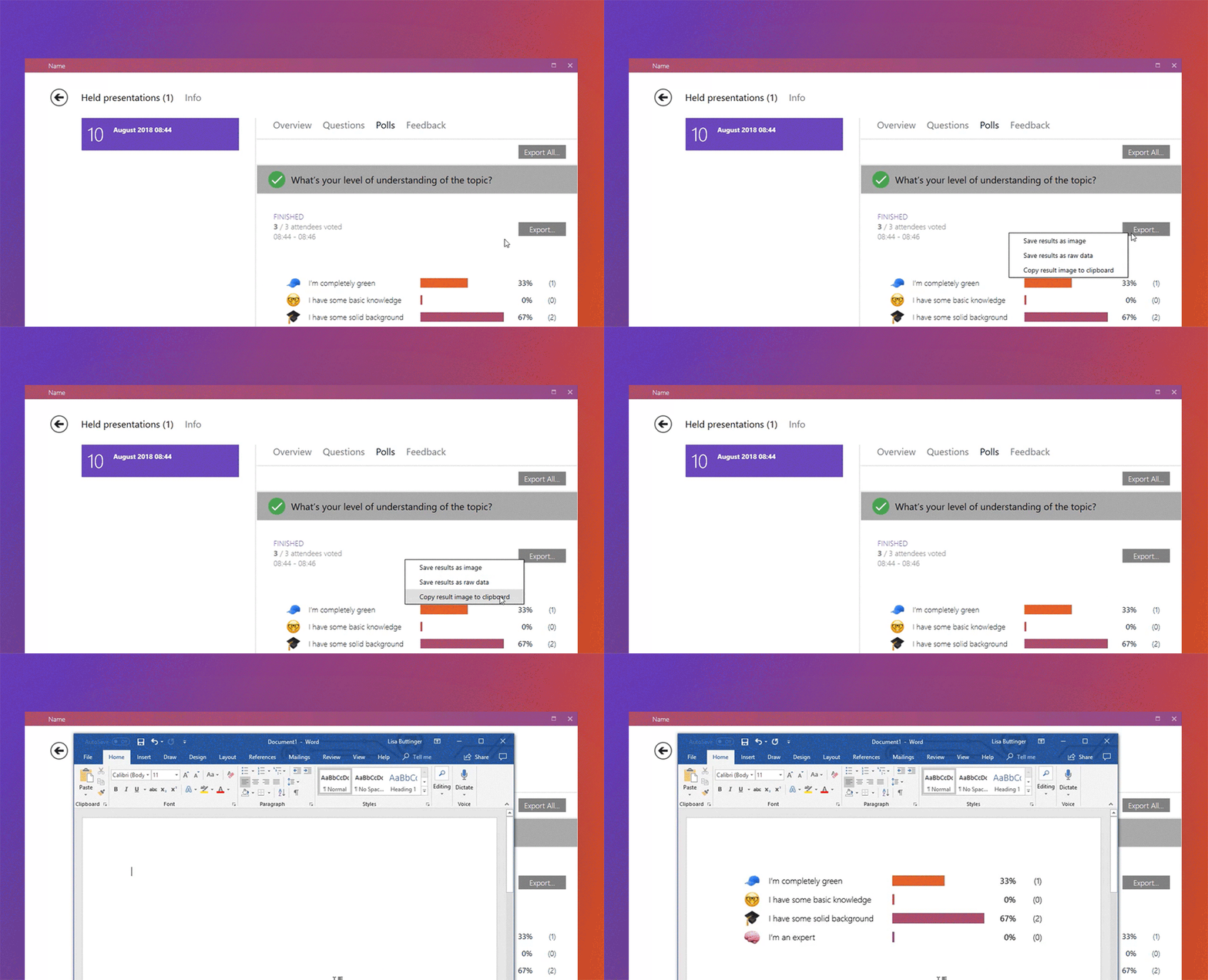
The results of your polls and the questions you've been asked can now be easily exported. Whether you prefer them as raw data for Excel or pretty diagrams for Word - it's up to you!


Password Protection
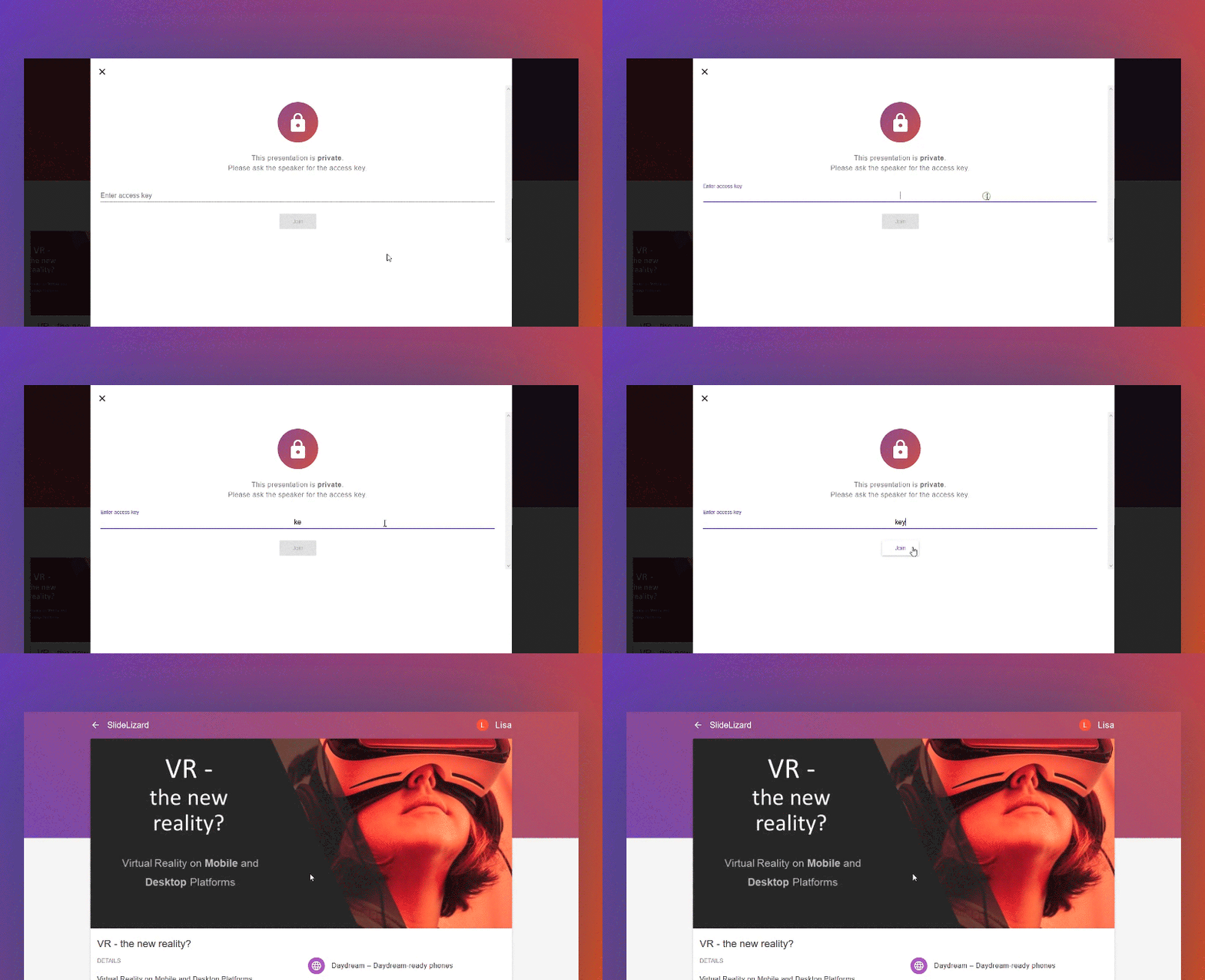
Don't want strangers passing by joining your presentation?

Protect your presentation with an access key! Attendees have to enter it after the presentation code if they want to join your presentation.


German Translation

Close Google Translate - you don't need it anymore:
We've now got a completely translated version for our german speaking users!


Enjoy!


To update the SlideLizard PowerPoint Add-In, just open PowerPoint and you'll get a update dialog.
Don't have it installed yet? Download it here.


About the author

Lisa Buttinger

Lisa is a graphic and web designer at SlideLizard.


Top blog articles
More posts

Create Curved Arrows in PowerPoint

Digitization experts invest in SlideLizard to make presentations more successful

LIZ AI Produktbild
LIZ AI - Autopilot for PowerPoint

Your existing systems. Automatically orchestrated and centrally connected.

LIZ AI connects directly with your enterprise systems and automatically turns data into presentations. Content is intelligently generated, updated, and visualized directly in PowerPoint. Presentations are created in the background, stay up to date at all times, and automatically match your corporate design - without manual effort.

Learn more about LIZ AI

The Glossary for Presentations & AI

AI Hallucination

AI hallucination describes the phenomenon where an LLM confidently produces content that is factually incorrect, fabricated, or entirely made up — presented as though it were true. Hallucinations occur because language models generate statistically probable text based on training patterns, without access to verified facts. In enterprise contexts, hallucinations in presentations are a serious risk. AI grounding — anchoring outputs to verified company data — is the primary strategy for preventing hallucinations in production AI systems.

Learn more

Slide transitions

Slide transitions are visual effects that play when moving from one slide to the next during a PowerPoint presentation. They range from simple fades and cuts to more elaborate animations like wipes, pushes, and morph effects. Used thoughtfully, transitions can reinforce the flow of a narrative and add polish to a presentation. Overusing dramatic transitions, however, can distract from the content. Consistency — using the same transition style throughout — is generally recommended for professional presentations.

Learn more

Recall Questions

Recall questions ask participants to retrieve and state information they have previously learned or been told. They test memory and knowledge retention rather than understanding or analysis. In training sessions and educational presentations, recall questions at the end of a segment can reinforce key points and check how much the audience has absorbed. While they don't assess deeper comprehension, they are an efficient tool for checking baseline knowledge and reinforcing core facts.

Learn more

Large Presentation Model (LPM)

A Large Presentation Model (LPM) is a specialised AI system designed for the demands of enterprise presentation communication. Unlike generic language models, an LPM does not simply process text — it connects company knowledge, audience context, live data, and brand guidelines to produce consistent, presentation-ready communication. The system encompasses the entire presentation cycle: from content structure and storyline to visual execution. Rather than acting as a simple generation tool, it takes on the role of a coordinating, agent-based system.

Learn more