Virtual Reality

Virtual Reality

Term explanation

Definition and meaning

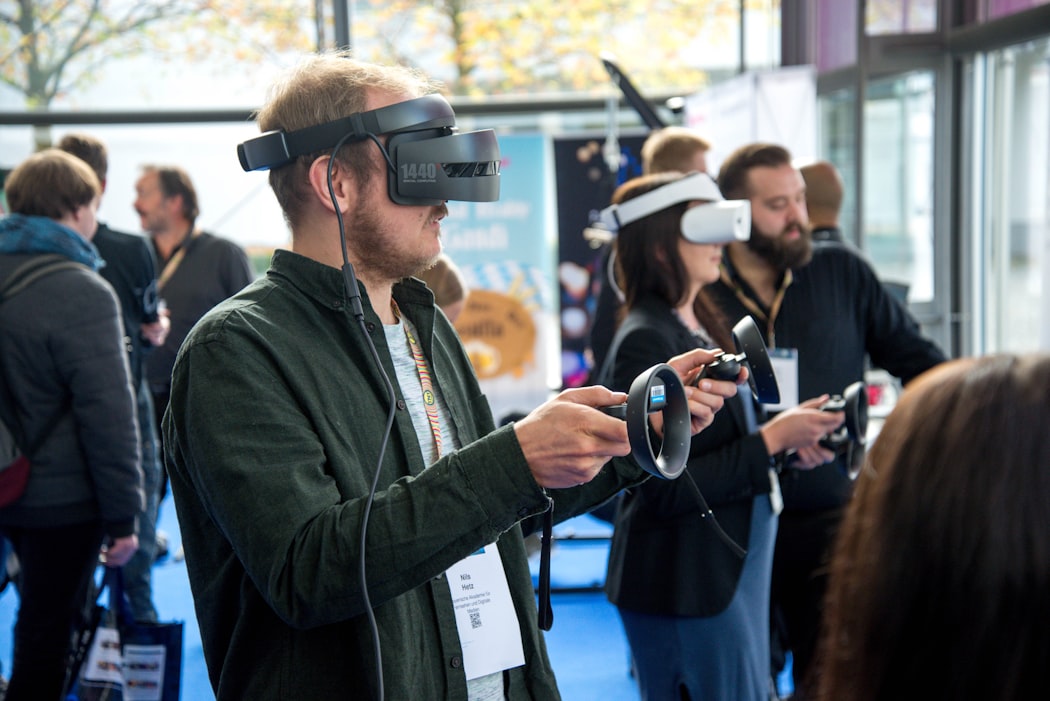
In a learning context, virtual reality (VR) creates immersive, simulated environments in which learners can practice skills, explore scenarios, or experience situations that would be difficult, expensive, or dangerous to replicate in real life. VR training is used in industries such as healthcare, aviation, manufacturing, and emergency services. By placing learners inside a realistic environment, VR significantly increases engagement, retention, and the transfer of skills to real-world performance.

Before or after a VR learning experience, SlideLizard LIVE helps you gauge prior knowledge and gather feedback with live polls and quizzes directly in PowerPoint — making debriefs and knowledge checks seamlessly interactive.

Learn more →

Other glossary terms

Interpersonal communication

Interpersonal communication refers to the exchange of information, meaning, and feeling between two or more people. It encompasses verbal and non-verbal signals and shapes relationships in both personal and professional contexts. Effective interpersonal communication involves active listening, empathy, clear expression, and the ability to read and respond to social cues. It forms the foundation of teamwork, leadership, customer relationships, and all forms of collaborative work.

Learn more

Nonverbal Communication

Nonverbal communication encompasses all forms of information conveyed without words — including body language, facial expressions, gestures, eye contact, posture, and tone of voice. Research suggests that a significant portion of interpersonal communication is nonverbal. In presentations, nonverbal cues strongly influence how a message is received: open posture conveys confidence, eye contact builds trust, and a steady voice signals authority. Presenters who align their nonverbal signals with their verbal content are generally perceived as more credible and engaging.

Learn more

.pot file extension

A .pot file is a legacy PowerPoint template format used to define reusable styles, layouts, and formatting for presentations. Like its successor .potx, it allows teams to create multiple presentations that share the same visual identity without starting from scratch each time. The .pot format was replaced by .potx in Office 2007, which introduced an open XML-based structure for improved compatibility.

Learn more

Online Communication

Online communication encompasses all forms of information exchange that take place over digital networks — including email, instant messaging, video calls, social media, webinars, and collaborative platforms. It has become the dominant mode of professional communication, enabling global teams to collaborate in real time regardless of location. Online communication introduces unique challenges around tone, response time, information overload, and the loss of non-verbal cues, all of which require deliberate attention to maintain clarity and connection.

Learn more

Top blog articles
More posts

How to export high resolution images from PowerPoint

Best Office Mix Alternative in 2022

Microsoft-Partner Logo

Official Partnership

SlideLizard is an official Microsoft-Partner

Find us in the Microsoft-Partner network