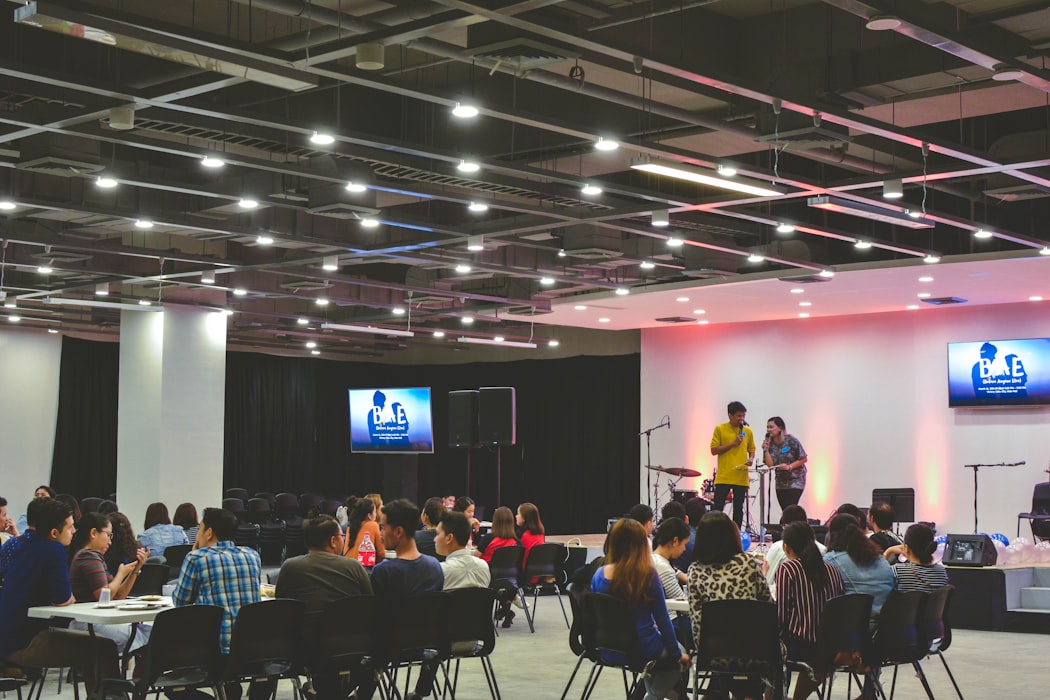
Break-out-Room
In live online training, it is sometimes useful to divide the students into small groups for certain exercises, as it would be impossible to have conversations at the same time. Break-out-rooms are used so that people can talk to each other without disturbing the others. When the exercise is over, they are sent back to the main room.
Learn more
Massive Open Online Course (MOOC)
Massive open online courses (MOOCs) are large-scale online courses accessible to anyone with an internet connection, often free of charge. MOOCs are delivered through platforms such as Coursera, edX, or Udemy and can attract thousands of learners simultaneously. They typically combine video lectures, readings, quizzes, and discussion forums. MOOCs have democratized access to university-level education and professional skill development worldwide.
Learn more
Manuscript Speech
For a manuscript speech, the speaker has an entire manuscript to read from. The benefit is that, as every single word is scripted, no important parts will be missed. However, speeches that are fully written down often seem unnatural and may bore the audience.
Learn more
Audience Demographics
Audience Demographics are the characteristics of listeners like age, gender, cultural backgrounds, group affiliations and educational level. The speaker has to consider all these characteristics when adapting to an audience.
Learn more